


An uncomfrotable amount of Carrot Lane subscribers played the four-year cycle.
They made the call to sell in December, which at the time felt like a smort decision, and after the Ten Ten crash, which registered as the largest liquidation event in Crypto history, who could blame them?
Then, when Donald Trump started bombing Iran, it only reinforced that feeling that getting out was the right move.
The issue is what happens after that.
Selling at a profit, if there is any, triggers a tax event, and that immediately becomes your hurdle rate. So, unless you’re never planning to invest in crypto again, you’re already starting from behind the start line. Then, when crypto drops like a broken elevator, and that stomach-churning fear kicks in, most people don’t buy back in with the same size because they’re too scared to lose it.
It ultimately leaves you with less exposure to the very assets that tend to outperform in an uptrend.
So the TDLR is that it’s mostly brain-dead and pointless unless you need the money for real life. If that’s the case, do what you’ve got to do, but don’t get confused into thinking it's an effective trading strategy.
The volatility is a function of how these assets work, and if you can add during a downtrend, it gives you the compounding on the back end. Caveated with, you need to be in the right assets.
So you either add into the pain or do nothing. Controversial opinion, but it’s highly unlikely that you’ll successfully trade around the asset.
A lot of you are in your first cycle and have stepped into a number of the assets I’ve spoken about and covered in detail, and whether it’s SUI, NFTs, PNKSTR, SOL, XRP, Bitcoin or Ethereum, there’s enough evidence there to suggest they outperform when financial conditions improve.
So it’s not about blaming the assets for underperforming, but zooming out to understand when financial conditions are improving.
The ISM Manufacturing Index is one way to look at that, as it’s essentially a monthly sentiment survey sent to 4,000 people working in supply chain management, asking about new orders, employment, inventories, and exports, which provides a forward-looking view of where the economy is heading.
It’s as sharp as a surgeon’s scalpel.
The problem right now is that oil prices have increased by more than 50% over the last six months, and the threat of war is keeping many people on the sidelines. It’s a giant red herring. Historically, periods like this are often when people should be gradually adding to their highest-conviction positions.
Sticking to the sweet spot of battle-tested assets and not drifting too far out on the risk curve into obscure ecosystems.
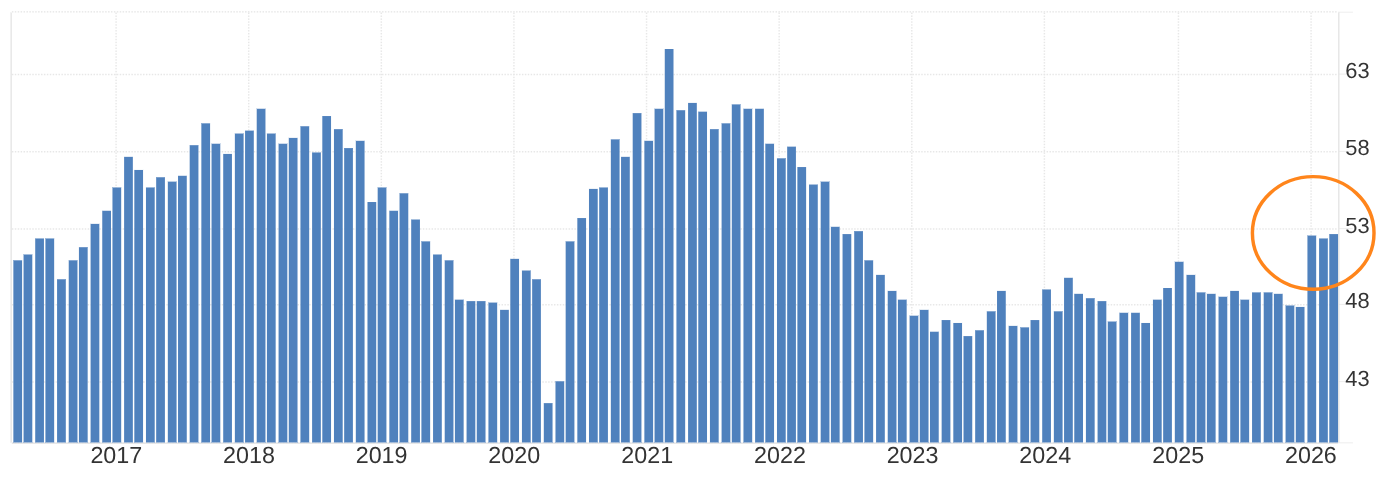
The ISM oscillates like a heart rate monitor, as shown in the chart below. It moves between contraction and expansion approximately every four years, which is a direct result or influence of the 3 to 5-year debt refinancing cycle. It gives you the clearest read on where the economy is heading, rather than relying on lagging indicators.
At its core, it’s a measure of productivity, which feeds into corporate profits and ultimately has a knock-on effect on stock market prices.
A reading above 50 and trending upward typically suggests we’re moving into a bull market environment, while a reading below 50 and trending downward points toward a bear market, and right now the forward-looking projections are starting to turn positive with three consecutive months above 50, which is usually an early signal that conditions are improving even if sentiment hasn’t caught up yet.
Crypto’s silver bullet.
Folks are still clinging to the four-year cycle, as if Satoshi Nakamoto had hardwired a neat little seasonal pattern into the code for everyone to trade off.
It’s not how this works. The four-year cycle is really just a byproduct of the debt refinancing cycle.
As Michael Howell, the maestro on liquidity, says, markets are now liquidity machines that facilitate debt refinancing.
“Modern economies run on debt, not real investment. And, financial markets are now just liquidity machines that facilitate debt refinancing, where asset prices (P) depend on:
Global Liquidity (L), not fundamentals, and
Risk positioning (P/L), such as duration targeting, passive investment strategies, not valuations
Hence, in our macro-framework:
P= L x P/L
However, finance is fragile. Investors now play a survival game, where Central Bankers and risk managers, not traders, increasingly call the shots. Winning requires tracking liquidity, not earnings. Crises happen when cash flows dry up, not when assets are overpriced. Central banks must keep the system running by backstopping liquidity provision.”
What he’s saying is that the economy runs on borrowed money.
Governments, companies, and banks are constantly borrowing and refinancing debt to keep things moving.
That means markets are less about “is this a great company making loads of money?” and more about “is there enough money flowing around the system?”
Translation:
• Liquidity = how much money is available to invest
• Positioning = how willing people are to take a risk with that money
Most folks missed this part.
In 2021, the Fed extended debt maturities by a year, pushing the timeline out, and now you’ve got roughly $9 trillion in debt that needs to be rolled over this year, meaning a huge amount of capital is about to flow back through the system.
Then you’ve got what Kevin Warsh has been saying, which adds another layer to this. He’s expected to be next in line for Fed Chair, and he’s already suggested rates should have been cut sooner, implying the current Federal Reserve is behind the curve.
His view is that they’re missing what’s happening in real time, especially how AI is improving business conditions, and if productivity is rising off the back of that, inflation becomes less of an issue, which gives the Fed more room to keep rates lower than people expect.
“I don’t think the data will show these productivity gains for many years after the anecdotes reveal them.
What’s that Bezos quote? “At moments of huge consequence, at turning points, if you have a set of data telling you one thing and a set of anecdotes telling you the other, listen to the anecdotes.” One hundred percent. I think Jeff is exactly right.
The anecdotes have already started to turn.
The difficulty for policymakers, whether that’s central bankers or fiscal authorities, is that the economy is going to be growing but it won’t show up in the productivity statistics for a while. So they’re going to have to make a bet. Is the economy actually becoming much more productive? Is the technology spreading into more sectors? And what should they do about it?
My simple version of this is that everything technology touches gets cheaper.”
Bitcoins consolidation
The setup here is fairly straightforward.
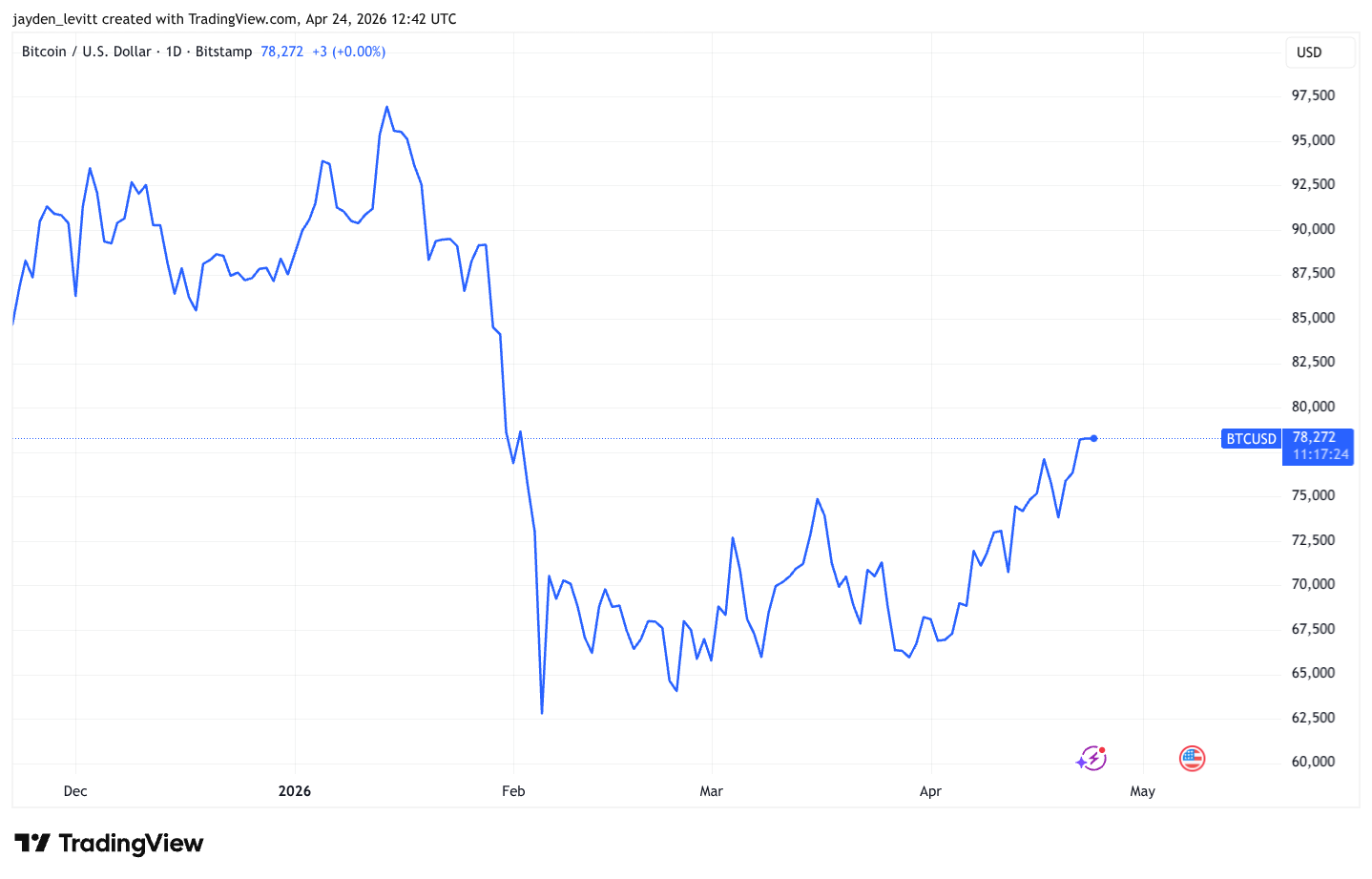
Bitcoin has been moving sideways for nearly 12 weeks now, holding up well amid global uncertainty and erratic oil prices. That kind of strength during uncertainty usually points to a move higher rather than lower.
All it really takes is a shift in tone. That could be positive news about Iran, rate cuts from the Federal Reserve that Polymarket isn’t pricing in, or the obvious political incentive for the Republican Party to support stronger markets heading into the November midterms.
Very soon, liquidity can flow back into the system, creating a much stronger backdrop for asset prices.
The sideways strength of BTC aligns with what technical analysis and Bitcoin investing expert Michael Van De Poppe has said for a while: the longer the price compresses and moves sideways, the more aggressive the eventual move tends to be, and in bullish structures, that usually resolves to the upside because it reflects accumulation rather than weakness.
He said recently :
“The longer it ( a consolidation) lasts, the heavier the breakout will be”.
NFTs are now exploding.
I’ve been going live on TikTok daily.
The thing that keeps catching me off guard is how many people are getting pot committed to smaller, illiquid altcoins while having little to no exposure to assets that have actually been battle-tested.
They’re basically missing the main trend, just capturing the low-hanging fruit in BTC, ETH, SOL, XRP, and instead going all in on microcaps and memecoins. Yuck.
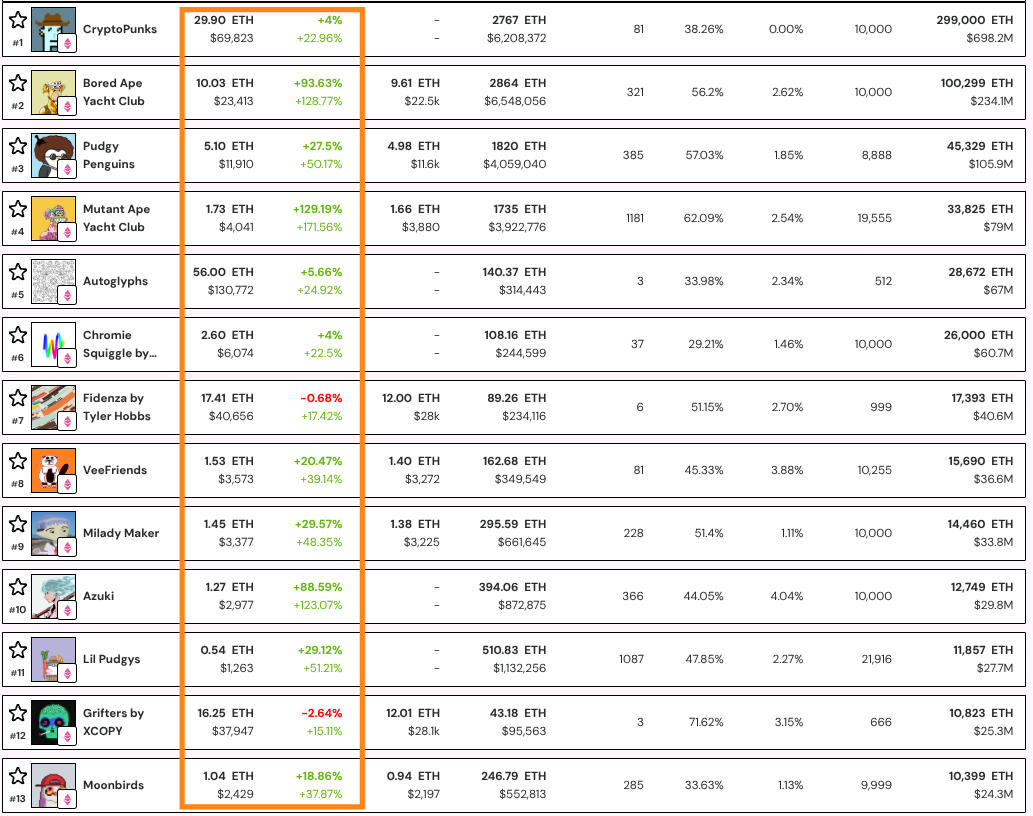
As a double whammy, a huge blind spot for everyone right now is NFTs, even from folks in the NFT space.
The first real use case of NFTs is art, and art sits upstream of wealth in crypto. But more than that, they’ve solved digital scarcity, and in many cases, they’re more stable than holding a random microcap token.
There’s also a different dynamic at play because the art layer is expressive, so people build a connection to the asset in the same way they would with a collectable, but at the same time, those assets organise communities, so when you buy into a collection, you’re also stepping into a built-in network or friendship group.
Then, when you remember an NFT is also a contract, it opens the door for added value, whether that’s access, events, ticketing, education, claim for a physical item or anything else the issuer wants to layer in, so it’s like a QR code on steroids with an art layer instead of some squiggly barcode.
The current trend of the NFT space reminds me of something an old cricket coach used to say: “there’s no hiding place for data”, and you can see NFTs starting to move the way you’d expect, with IP-led projects gaining traction first, and over time that likely shifts toward more thoughtful, culturally significant art and historically relevant projects.
PNKSTR.
One of the benefits of being in a private group is speed.
You can share opportunities as they’re happening rather than after the fact, and with something like PNKSTR, getting in early was crucial, though we’ve had a second bite at the apple.
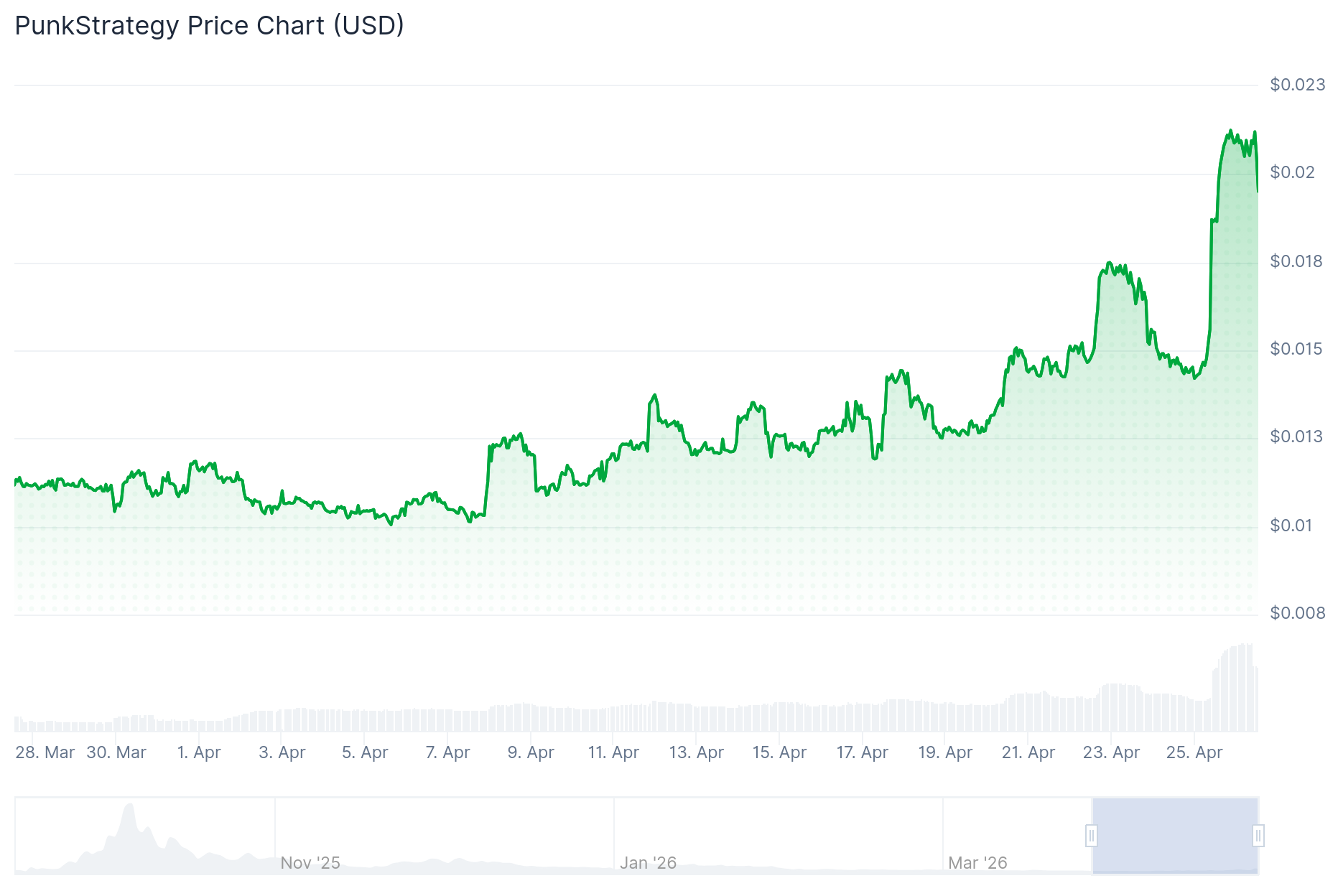
The token itself has been flat for a while and has bled out, but you can see what happens every time anticipation builds around a Punk being bought (or sold) through the protocol: the price starts to lift again, so the interest is sustaining.
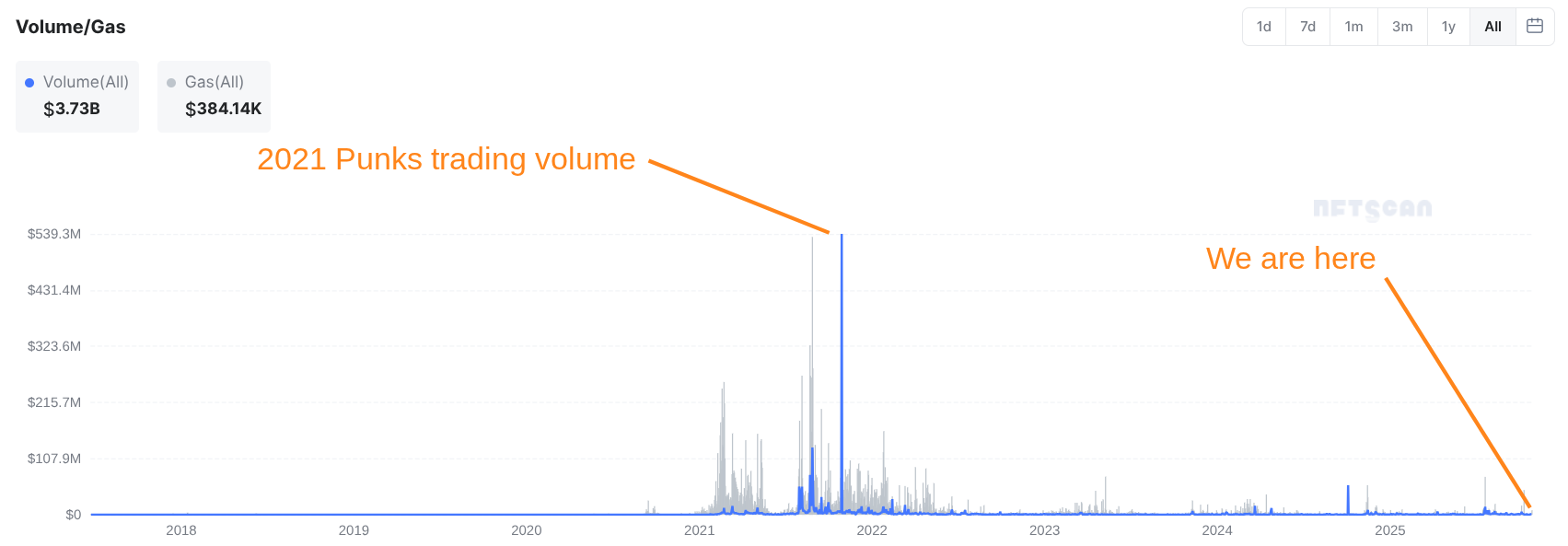
PNKSTR is an automated protocol that operates independently, constantly buying and selling the most iconic digital artwork in the space, CryptoPunks.
It works through an automatic flywheel. Every buy and sell takes a 10% rake that goes into a treasury. Once the treasury can afford a floor Punk, it buys one and instantly relists it at a 1.1x premium.
When that Punk sells, the proceeds are used to buy back and burn PNKSTR tokens, creating more fees that feed back into the system to buy the next Punk.
The deflationary design has people hooked because it’s a simple loop that makes sense.
People finally have a way to get price exposure to an iconic piece of digital art without having to sell a kidney.
More people are realising there is less risk associated with the asset vs say memecoins.
While nothing is bulletproof, there is some level of support from the assets in the treasury, and with around 41 CryptoPunks now held, your downside to zero is protected, provided you think they will sell at some point. Which to me is obvious.
I’ve been open about Adam (the founder) not being as visible as he could be. But the reality is, this runs without him. Every Punk sale becomes its own marketing event anyway, so the machine keeps turning.
For me, the recent price action, up 74% in the last 30 days, suggests it has moved beyond the proof-of-concept phase and has now been properly battle-tested. If Ethereum and NFTs start running again, this could get interesting quickly.
But I’ll repeat what I’ve said from the start. This is not a core allocation, I think, around 10 per cent at most. Again, you do you.
The monthly chart below shows it outpacing both Ethereum and Bitcoin in an uptrend, while still sitting at a tiny $18 million market cap, all while being pegged to the value of CryptoPunks.
NFTs are impossible to sell once you’re attached.
The best assets run to ridiculous prices and shut most people out, and when conditions tighten, there’s no real floor, just full-blown capitulation.
PNKSTR sits in the middle of that and plays the volatility. People will say you can just buy fractionalized NFTs instead, but I’d rather lick a 9-volt battery than own that. There’s nothing appealing about holding 0.01 per cent of something you don’t really own, while someone else gets the benefit of the actual asset.
As Web3 savant and pseudonymous Punk6529 puts it, owning fractional assets actually loses value because it often trades at a discount to the net asset value:
“In any case, every properly fractionalized NFT / NFT collection with a redemption mechanism (Fractional, Whale, etc) has always traded at a discount to NAV because it is boring - just hanging around owning a 1% of a punk in the hope that later you will sell it for more, is very boring IMHO. I bought some fractionalized $APE back in 2021 and almost died on the spot from boredom. One the other hand (referring to PNKSTR), “we will collectively own a lot of punks forever”, I dunno, that seems more fun and interesting and you can “do things” with them.”
SUI.
SUI is my bet for this cycle.
It’s a combination of things that line up, the low float, the strength of the team, the tech and its ability to potentially bring large parts of Web2 onto it, plus Raoul Pal being involved on the advisory board and publicly stating that a large portion of his liquid net worth is in the asset.
Then you layer on the price action, which consistently outperforms in uptrends, it’s gathering mindshare across the timeline, and it tends to move closely with Bitcoin, which just makes it one of the cleaner bets this cycle.
I struggle to find anything else at a similar market cap that ticks the same boxes.
I wrote about SUI when it first launched and, more recently, put out a full research piece on it. A lot of readers got in early, which was great to see, but many people also got in near the highs.
No one could have predicted how things would unfold, whether it was tariffs, the Iran situation, or the October 10th liquidation event.
At the end of the day, it’s still largely indexed against Bitcoin, so the real question is simple: does Bitcoin go higher from here? I think it does. And if that plays out, the smaller, less liquid assets tend to move harder on the upside.
The same volatility that creates that upside also brings the drawdowns. That’s the part most people avoid. But in reality, that’s usually where the opportunity sits, adding on the downside instead of slamming your laptop shut and walking away from the market.
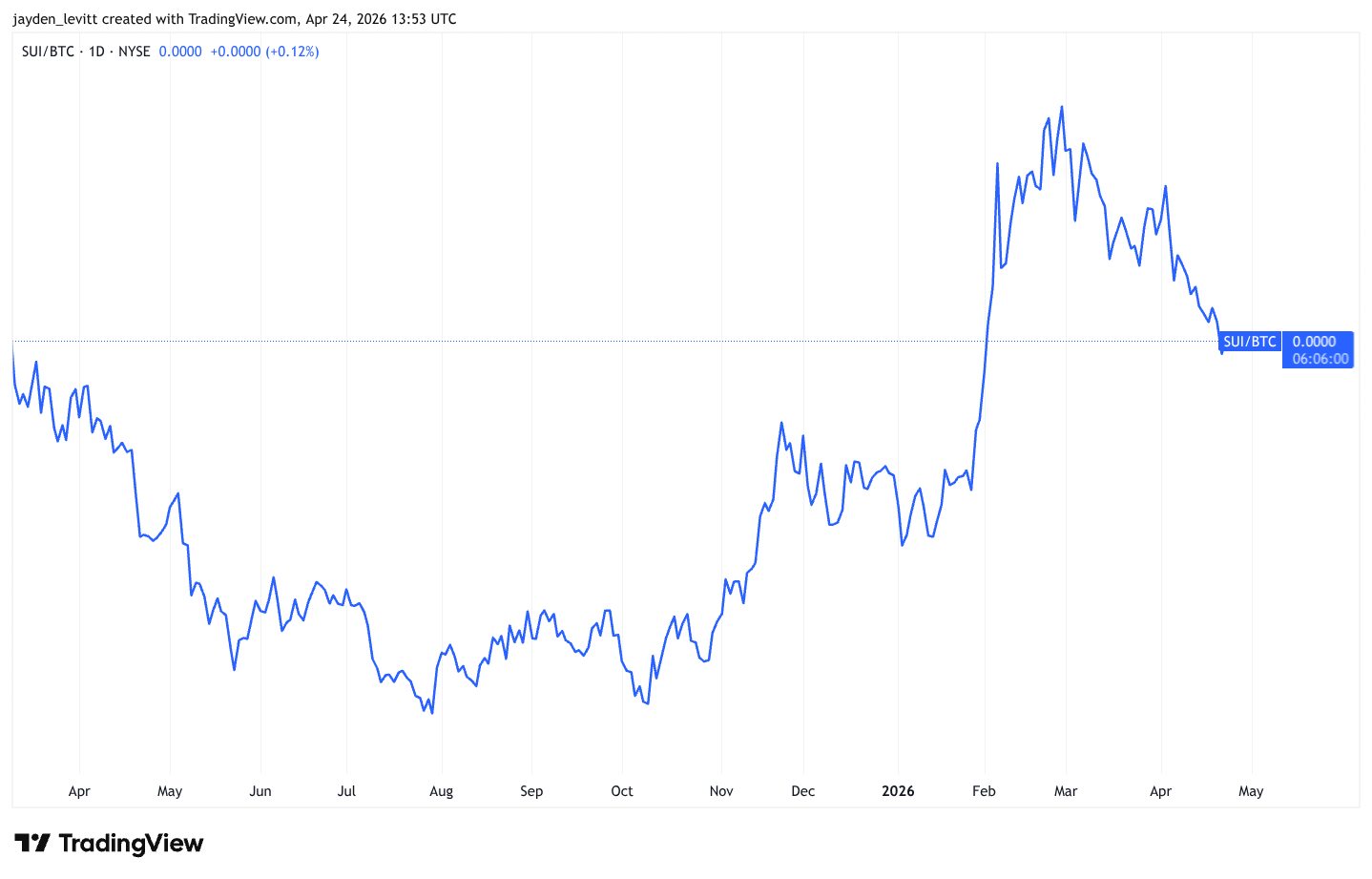
If you pair SUI against Bitcoin over a longer time frame, it outperforms, mainly because it’s smaller, less liquid, and still tied to Bitcoin, which means the moves tend to be more aggressive in both directions.
You can also see a clean wedge pattern forming, which typically leans towards an upside break if momentum holds.
Final Thoughts.
The saying that a smooth sea never made a skilful sailor could never be truer in times like these.
But you must zig while others zag, and a whole bunch of folks are going to get caught offside here: either trading in and out of the assets and thinking this entire year will be a bear market, or turning away from the space.
Lean in, folks.
This is not meant to be easy. I know it sucks when something you hold goes down, but the promise of the technology has not changed. We just need financial conditions to play ball.
The ISM is showing a strong uptick for three months in a row, with the next update on the first Monday of each month. You can see clear anecdotal evidence that Kevin Warsh is a political weathervane who will do whatever Trump wants. Or as Elizabeth Warren called him, “Donald Trump’s Sock Puppet”.
He can have his head as far up Trump's ass as he likes for all I care. In fact, the further the better, because he will likely make our assets go up.
No need to overthink it.
Play the barbell. On one side, you capture the trend through obvious blue-chip crypto tokens. On the other, you avoid overcommitting to risky micro-caps while making sure NFTs don’t become a blind spot by owning culturally significant art, historical pieces, or the strongest IP plays. Read that again.
NFTs will outperform everything. The data does not lie.
I stand by these Crypto assets even if the timing was off.
If you want to be closer to the community, the Carrot Lane Founding group is where it happens. That’s where the deeper conversations are, and actual friendships are being formed.
Annual members get:
1-2-1 strategy call with me
Access to a premium research newsletter
Founding members get:
1-2-1 strategy call with me
Private members-only group chat
Daily, real-time market discussions
Monthly deep-dive group calls
Direct access to the community and a premium research newsletter
The content of this article is for informational purposes only and should not be considered financial, tax, or legal advice. You should consult a financial professional before making any significant financial decisions.