

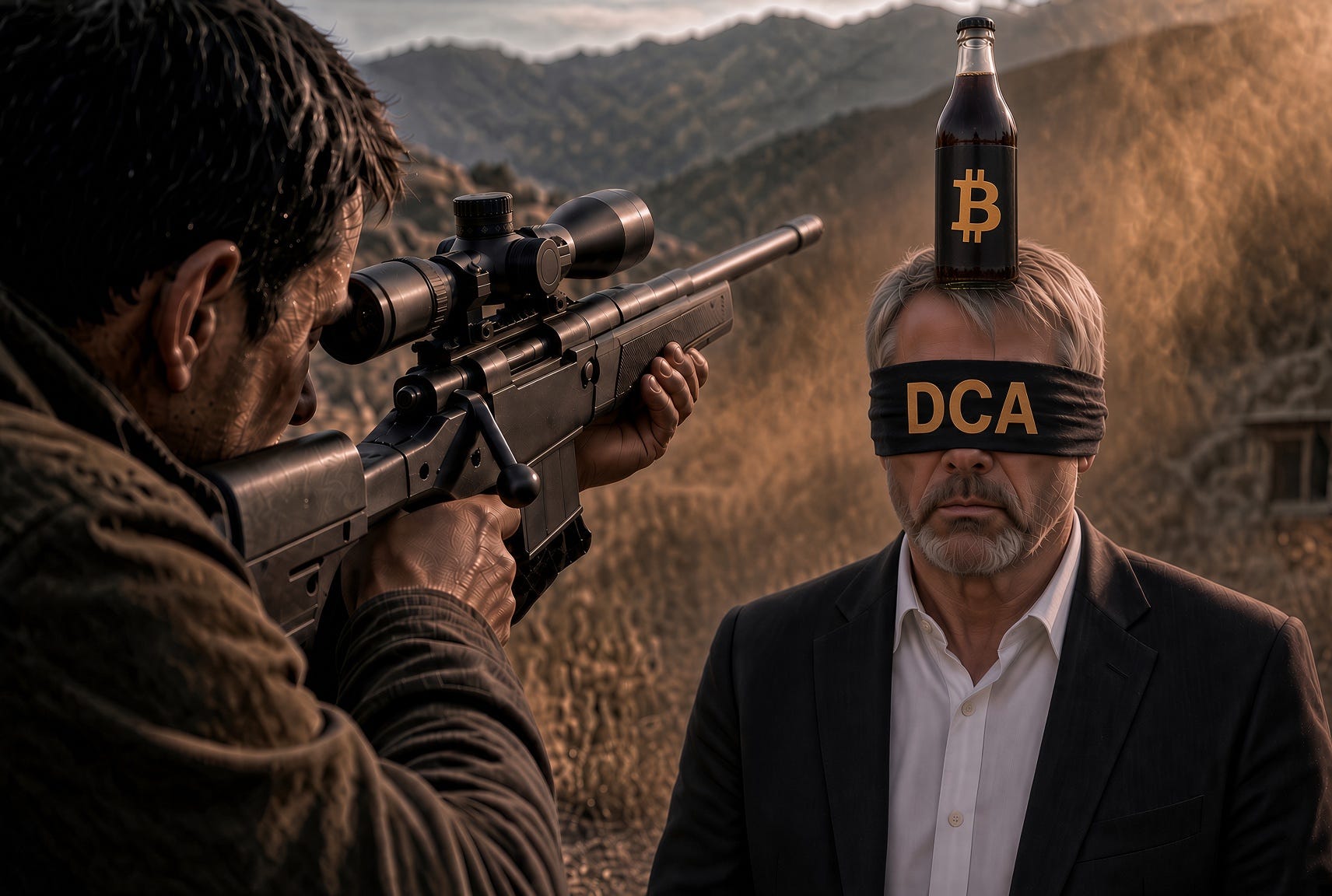
Today’s newsletter is only possible thanks to the paying subscribers who support Carrot Lane for a small fee. If you find value in the work I’m doing here, please consider upgrading to a paid membership for additional benefits and to help support the publication.
Famous investor Peter Lynch once said:
“Far more money has been lost by investors trying to anticipate corrections than has been lost in the corrections themselves.”
I’ve been inundated with messages.
Mostly from Nostradamus-style price predictors creating a stench in my comments section, evangelising about an October bottom and telling people to “Ignore this fakeout.”
I have to laugh at the psychology of hanging your entire strategy on a four-year cycle framework and convincing yourself the market will bottom on “October 5th”, exactly 365 days after the previous cycle high.
The issue is that the market may have structurally changed while everyone is still religiously following a made-up playbook.
Scott Bessent has agreed to double buybacks on U.S. debt, which essentially acts like a soft stimulus play because the U.S. is printing more money to buy back old money, a bit like that elephant meme of it fornicating itself with it’s trunk.
Even if you’re right, why take the risk? It’s the part people are completely missing.
If we enter an uptrend from here and you’re sat on the sidelines waiting for your perfectly timed October bottom, the bigger risk isn’t being in an asset that could drop another 20–30%.
It’s missing the move altogether.
That’s why I believe now is the time to start DCAing into the battle-hardened assets. Not going all in. Not trying to call the bottom. Just systematically scaling in weekly.
Many of you reading this messaged me in 2024 when I first wrote about SUI. You watched it go four or five multiples, and some late entrants eventually chased it, buying the peako top.
Well, this is the time you wished you had back then.
The beauty of crypto is that volatility gives you another opportunity to catch up.
These downtrends give you the chance to slowly scale into the strongest assets you believe will perform this cycle. They also give you an amazing opportunity to bring down your watermark.
But not if you’re carrying PTSD.
Buckle up and let’s get into it.
Bitcoin.
Unless you’ve been living under a rock, you’ll know Bitcoin is still the granddaddy pulling the strings across the entire crypto market with a dominance of 59.6%.
Like it or not, the price performance of almost every asset we lean into can largely be explained by what Bitcoin is doing. Bitcoin sneezes, alts catch pneumonia.
Using daily returns from 31 August 2025 to 31 August 2026, this is the correlation of these assets against Bitcoin:
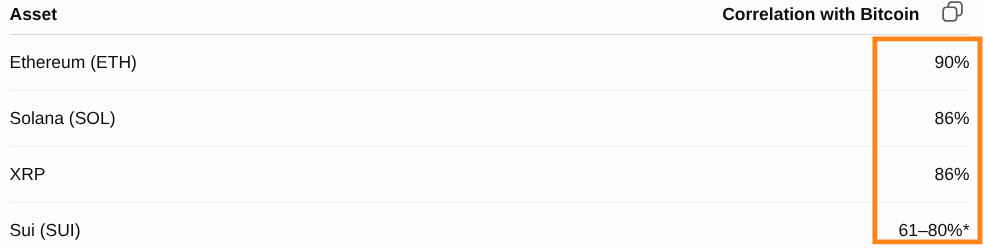
You don't really own four completely independent trades.
Over the past year, Ethereum and Solana have both shown roughly 86–90% correlation with Bitcoin, and XRP has been around 86%.
Even the much younger SUI has historically shown a strong positive relationship with Bitcoin.
Recently, plenty of muck has been slung at our grandpa token.
We had the October 10th crash, with a liquidation event 10x larger than anything crypto had experienced. Bitcoin got smoked, but as always, the alts took the real beating. The dog wags the tail in crypto, and when Bitcoin gets dragged down, everything further out on the risk curve gets nuked.
Then you had the Jane Street manipulation narrative, Bitcoin whales selling into the market, and the Iran conflict beginning in February, sending oil prices higher and putting even more downward pressure on an asset incredibly sensitive to financial conditions.
Basically, Bitcoin has spent months getting fish slapped from every direction. But here’s where things potentially get interesting.
The backdrop appears to be changing.
Scott Bessent’s double buybacks of U.S. debt have effectively acted as a soft stimulus, improving liquidity conditions at exactly the point everyone seems convinced we should be preparing for another leg lower.
The mechanism is pretty simple.
If the Treasury starts buying long-term bonds, it helps push yields down. Lower yields make scarce assets like Bitcoin and gold more attractive, while potentially adding liquidity to the system.
Cheaper money and more liquidity generally help risk assets.
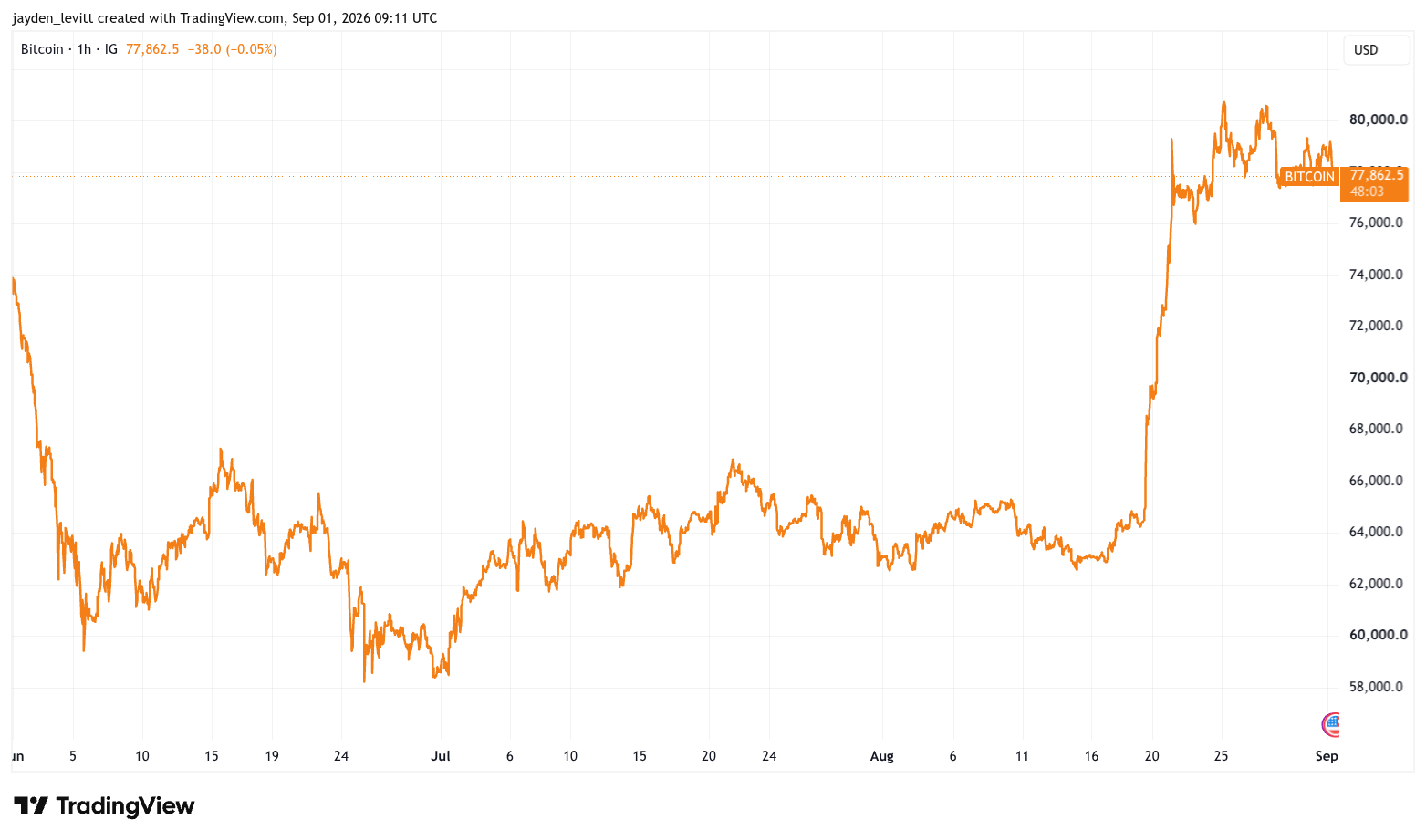
That’s why Bitcoin reacted so strongly to the news, moving from the mid-$60ks towards $80k.
And you can start to see that shift showing up in the chart below.
Ethereum.
Ethereum, the open-source app store of the internet, has been a bit of a sleeping giant this cycle.
In fact, I saw a hilarious chart the other day showing that if you’d bought ETH in 2021, you could have held it for five years, survived an entire crypto cycle, aged considerably in the process and still be down around 10%.
Yuck.
The caption read: “Gay dating app Grindr outperformed ETH during that time.” Lol.
The internet remains undefeated.
Part of the problem is that Ethereum has almost become a victim of its own success. Layer 2s were built to help scale the network, but in doing so they’ve cannibalised a chunk of the activity that previously happened directly on the main chain.
However, they have 31,869 developers, and 9,300 of them are active monthly, building out applications on this network, which is the largest developer base of any blockchain network.
We’re starting to see improved network activity again, particularly across the NFT ecosystem, where $600 million was added to the market cap of NFTs, which are predominantly Ethereum NFTs, but this also gives the chain an enormous cultural and historical moat.
Personally, I don’t hold much ETH directly.
My ETH exposure comes largely through NFTs because I think they give me a much more interesting leveraged bet on Ethereum while still giving me exposure to ETH itself.
If Ethereum runs, I get the ETH multiplier on the art assets. But I also own something with its own independent supply-and-demand dynamics sitting on top of it.
Author’s note: In my free Crypto Wealth Playbook, I share what I believe are the best risk-adjusted Crypto and NFT assets to get into this cycle: CLICK HERE
I’m much more comfortable owning fixed-supply assets on Ethereum.
Historically significant art, culturally significant art and genuine IP plays, where I can actually observe the scarcity, attention and demand.
For me, that’s a far more interesting way to play Ethereum.
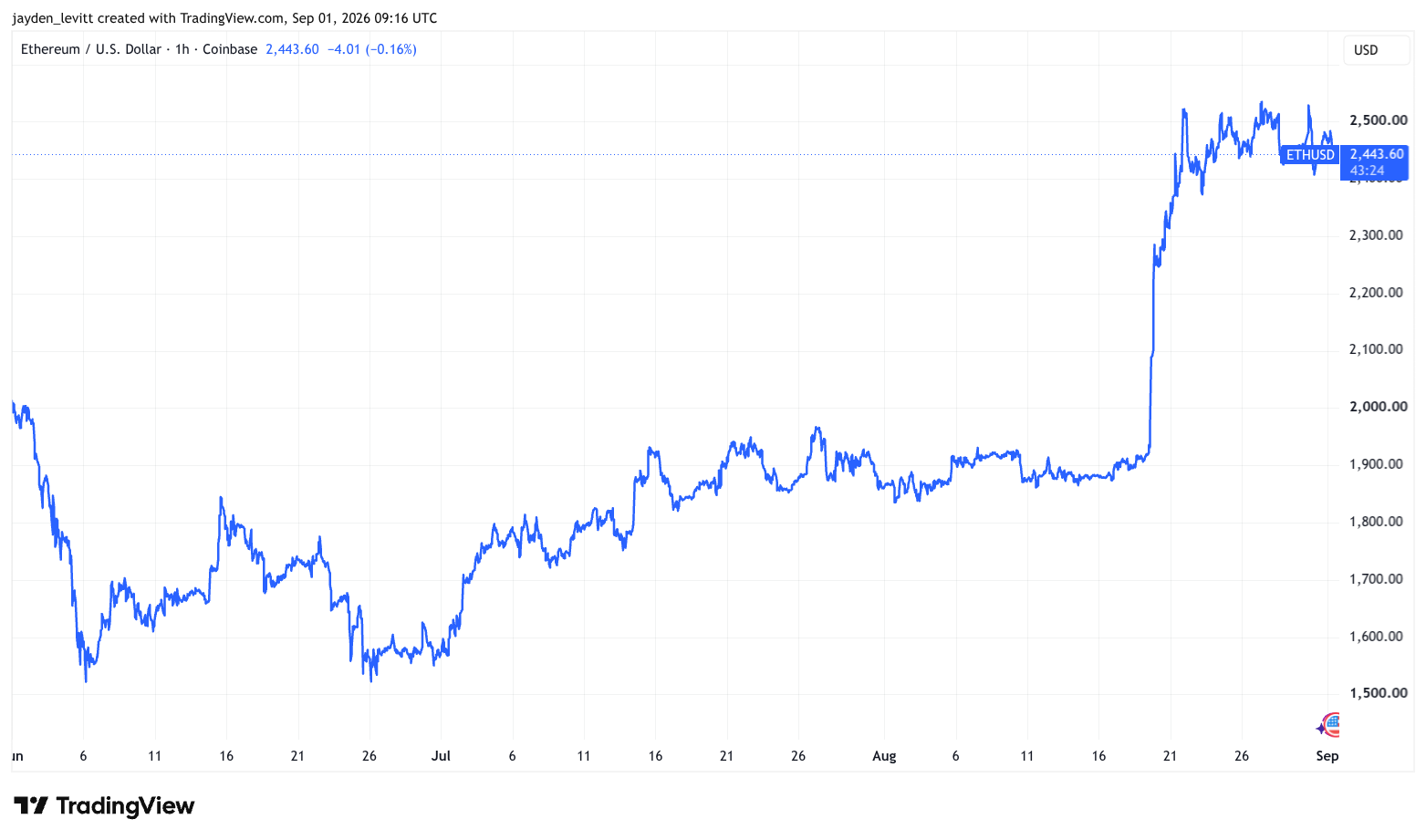
Solana
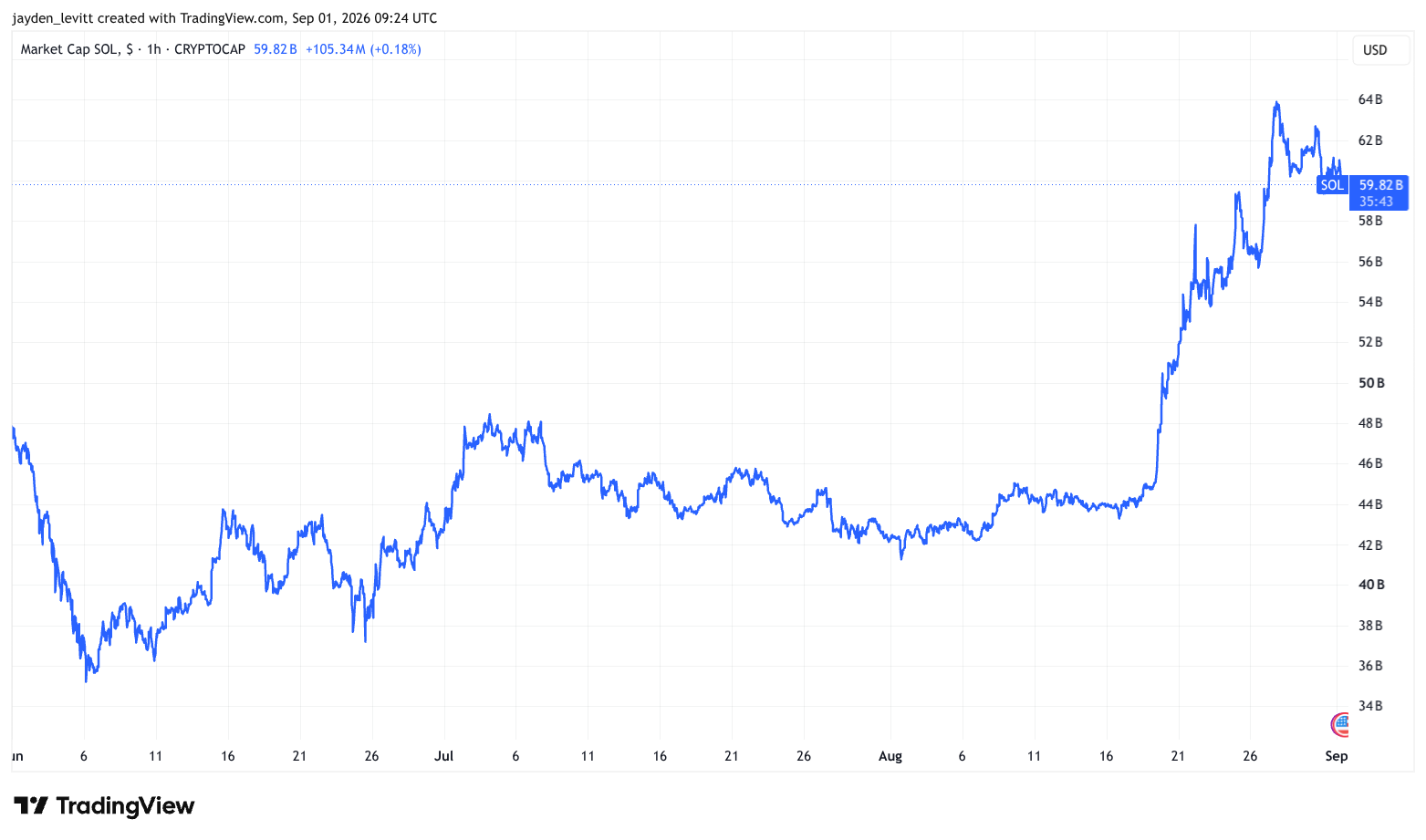
Solana, in my opinion, is probably the best “risk-adjusted” asset for this cycle.
And the reason is pretty simple. It’s already been through hell and come out the other side. So you have a perfect storm: it's small enough and established enough to be in a Goldilocks zone.
FTX absolutely frazzled SOL when SBF pulled the aux cord out of his trading Ponzi empire while having around a 15% stake in Solana. My SOL went from around $257 all the way down to $8, which was stomach-churning but also, in hindsight, offered a generational entry point. At the time, plenty of people declared it dead, buried and ready to push up daisies in the crypto graveyard.
Then it came roaring back like Busta f*cking Douglas, which I can tell you felt majestic.
The same appears to be happening with SUI, more on that in a second.
In crypto, surviving a cycle is a significant feature. Networks with a Lindy effect are the observable value you want to see at the tippy top of the totem pole. We now know Solana can take an absolute steel-cap to the shin bone, lose one of its biggest backers, survive a brutal bear market and still come back swinging.
But the price is only half the story.
Look underneath the hood, and there’s a ridiculous amount of activity happening across the network. And despite what your timeline might have you believe, it isn’t just 14-year-olds trading FartCoin.
The numbers are ridiculous.
In 2026, Solana still has around 2,300 monthly active developers, including nearly 700 full-time developers (17k in total). The network is currently doing around 100 million transactions a day, with more than 2 million daily active addresses.
Then you get to the application layer, which is where it gets really interesting.
Applications built on Solana are currently generating around $12 million in fees and $5.5 million in revenue every day, while its decentralised exchanges do more than $2 billion in daily trading volume.
It’s observable value on top of observable value.
Developers build applications. Applications attract users. Users create transactions, fees and revenue. And by owning SOL, you’re owning the network rail that all of that activity is happening on.
That’s why I love Ethereum and why I lean heavily into SUI.
Instead of trying to pick which individual application, token, or company becomes the winner, you can own the network rail they’re all being built on. It becomes a bit of a pick-and-shovel play.
Famous macro investor Raoul Pal recently shared his view.
“I just think the layer one bet is just easier, right? It’s the infrastructure layer. There’s still excess capacity. We’ve got plenty of use cases coming in front of us. It’s just easier to capture. It might make you less money than a product market fit occurring in a application layer. But they’re much harder to figure out. When the base layer is pretty straightforward.”
I think Solana sits in a perfect middle ground.
It’s big enough and battle-tested enough that we know it can survive a full cycle, but it’s still small enough that it doesn’t require the ocean of capital Bitcoin needs to move the needle.
For me, that combination of survival, network activity, application-layer growth and market-cap size makes Solana a really strong asset this cycle.
(I own a minimal amount of SOL).
SUI
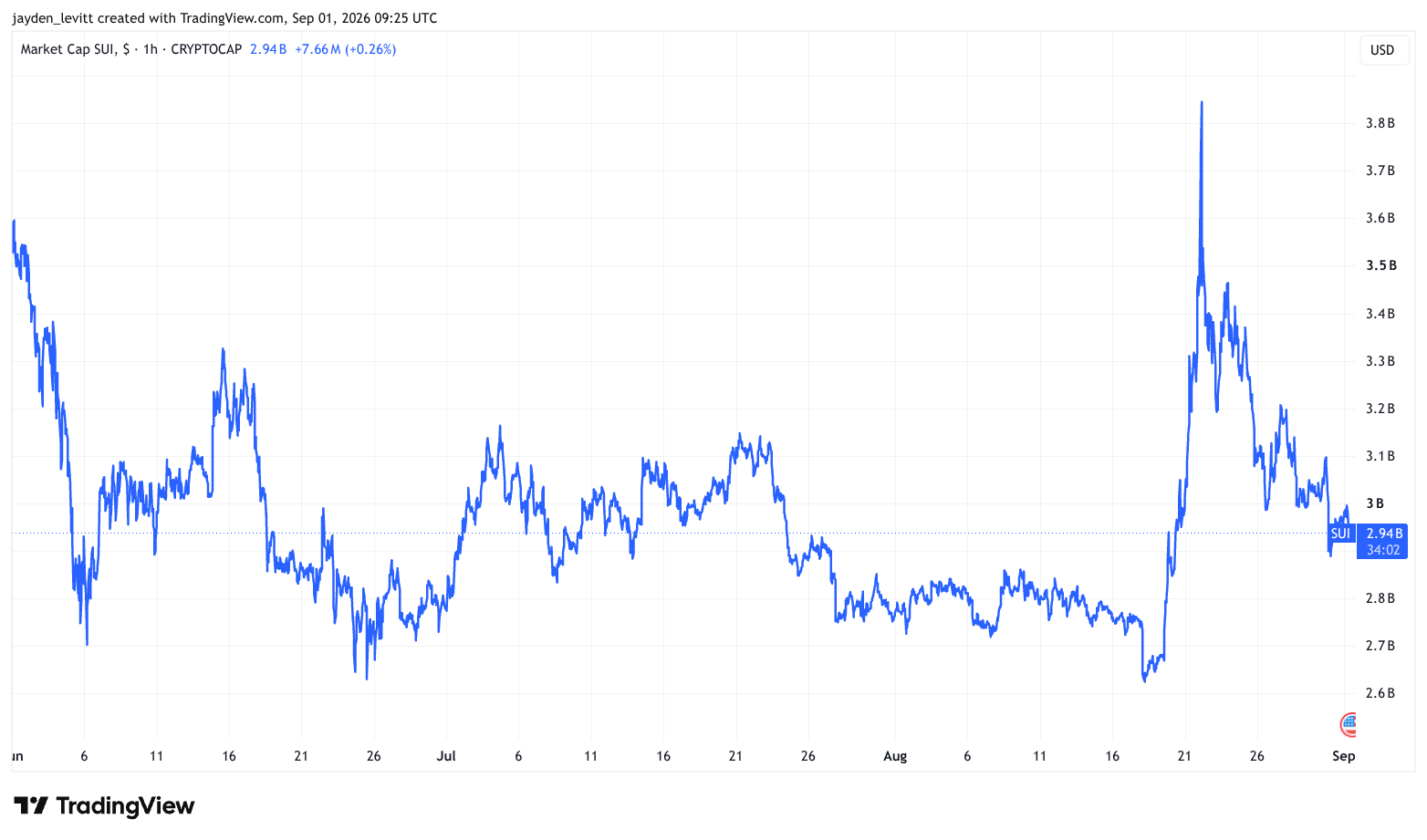
Sui is down 70%. In almost any other market, you’d assume something is fundamentally broken.
In crypto, especially with a first-cycle asset, that’s the price you pay for sitting further out on the risk curve.
Bitcoin has had a tariff pounding.
Throw in the Iran conflict, tightening financial conditions, and Bitcoin bleeding, and naturally a higher-beta, first-cycle asset like SUI, correlated with it, is going to bleed far more than the battle-hardened majors.
I lived this watching my Solana fall like a broken elevator.
But before the market got punched in the face, Sui was showing me exactly what I wanted to see. It was outperforming on price, outperforming Solana at points, and even breaking out against it.
And ultimately, that’s what we’re here for: price performance.
But underneath the hood, the growth is interesting too.
Sui has been the fastest-growing L1 ecosystem over the last two years, with around 1,400 active monthly developers. For context, Bitcoin has around 2,500.
More importantly, that growth has happened while the broader developer trend has been moving in the opposite direction. Total crypto developers are down around 20% over the last year, while the major EVM L1S have seen negative developer growth.
More people building means more applications, more activity and potentially more value compounding across the network.
And because Sui has an application layer, I don’t need to pick every individual winner built on top of it. Like Ethereum and Solana, I can own the network rail and capture ecosystem growth.
The value becomes observable.
Then you have the team. Sui was built by former Meta engineers, with serious people around the ecosystem, including Raoul Pal on the advisory board.
The tokenomics are where you need to keep your eyes open.
Relatively low circulating supply (41%) against a much larger fully diluted valuation cuts both ways. Low float can amplify price performance when demand comes flooding in, but that future supply eventually has to enter circulation.
You can’t conveniently ignore the unlocks because you love the asset.
That’s why Sui remains my core bet for this cycle, but it isn’t a marriage.
If I were building a barbell for anyone relatively new in the space, I’d be comfortable with around a 50% allocation to Sui alongside a mix of battle-hardened blue chips. Bitcoin, Ethereum, Solana, Doge and XRP. But as many here know, I’m pot-committed to SUI, with much smaller allocations in the other assets. That may change as we get deeper into the cycle.
Because at some point, Sui has to become a sell.
Jamie Coutts, widely regarded as one of the world’s top business cycle experts, has said he’s reallocated a significant portion of his portfolio from broad altcoin baskets into selective Layer 1s like ETH, SOL, SUI, and BNB.
He recently described these Layer 1 blockchains as the straightforward option in crypto.
“The concentration of activity is very clear in terms of the chains that are going to win. Now there's always going to be newcomers and there's always going to be potential to make outsized returns in chains that exist today or chains that exist in the future. But if you think about it just from a very simple asset allocation mentality, if you allocate to where the activity is and maybe size it slightly differently if you're looking for a little bit more beta in the market, that's kind of all you need to really think about.”
SUI is in its first cycle with future supply to contend with, and it will naturally experience far more violent drawdowns when the market turns against it.
But that’s the deal.
You don’t get the potential for ridiculous upside without accepting ridiculous volatility on the way there. Somewhat interestingly, it’s showing a naughty little wedge pattern on the chart below, which lends itself to breaking out to the upside.
Final Thoughts
Nobody knows exactly where the bottom is.
Not me. Not you. Not the bloke on X with 14 charts, three cycle overlays and October 5th circled in red.
And certainly not the smartest traders or fund managers in the world.
That’s really the entire point of this piece.
If you’re sitting on the sidelines waiting for October 5th because a four-year cycle framework tells you that’s when the bottom has to arrive, you’re trying to perfectly time something that doesn’t need to be perfectly timed.
Especially with an increasingly bullish backdrop.
The ISM is improving, with a recent score of 54.6, which signals that we are entering a bull phase in business conditions. Bitcoin has consolidated since February. We’ve got the U.S. midterms coming in November, increasingly dovish language around AI improving productivity, and Scott Bessent’s double buybacks on U.S. debt effectively acting as a steroid injection in the arse cheek of asset prices.
None of that guarantees your token will go up.
But it does tell me that the conditions for risk assets are becoming increasingly favourable at exactly the moment everyone seems terrified to own them.
Could Bitcoin drop another 20% from here? Of course. Could Sui get punched another 30% in the face? Absolutely.
That’s precisely why I like the DCA strategy.
You don’t need to call the bottom. You don’t need to go all in. And you certainly don’t need an unsolicited clairvoyant Crypto bro to give you permission to wait to buy on October 5th.
You can simply start adding weekly to the assets you believe offer the strongest risk-adjusted opportunity and let time do the heavy lifting. Because many of you have already lived through the opposite side of this trade.
In 2024, you watched assets like Sui go bananas and then flooded my inbox telling me you’d missed the boat. Well, this is what the other side of that opportunity feels like.
And unsurprisingly, it feels bloody horrible.
But that’s the paradox of investing.
The prices you desperately wanted when everything was going up are often the exact same prices you’re terrified to buy when everything is going down.
That’s why becoming numb to the volatility is such a gift. Crypto gives you these ridiculous drawdowns, but you can’t bite the same hand that feeds you because it’s an opportunity to catch up.
For me, a steady weekly DCA into battle-hardened assets, with some measured exposure to the higher-beta opportunities I believe can outperform, is the sweet spot.
Will I catch the exact bottom? Probably not.
But I don’t need to.
It’s why I’m DCAing into Crypto now, where I can see network activity is growing.
This content is for informational purposes only and should not be considered financial, tax, or legal advice. You should consult a financial professional before making any significant financial decisions.
I’ve owned BTC and SOL for years. I’m not adding nor am I selling trading these assets is like going to the dog track with a welfare check, hoping to lucky.
Thanks I started DCA as well